Home / Articles
SERF RF Korea: Multi-Depth RF Lifting at Lupiel Clinic
Home / Articles
SERF RF Korea: Multi-Depth RF Lifting at Lupiel Clinic
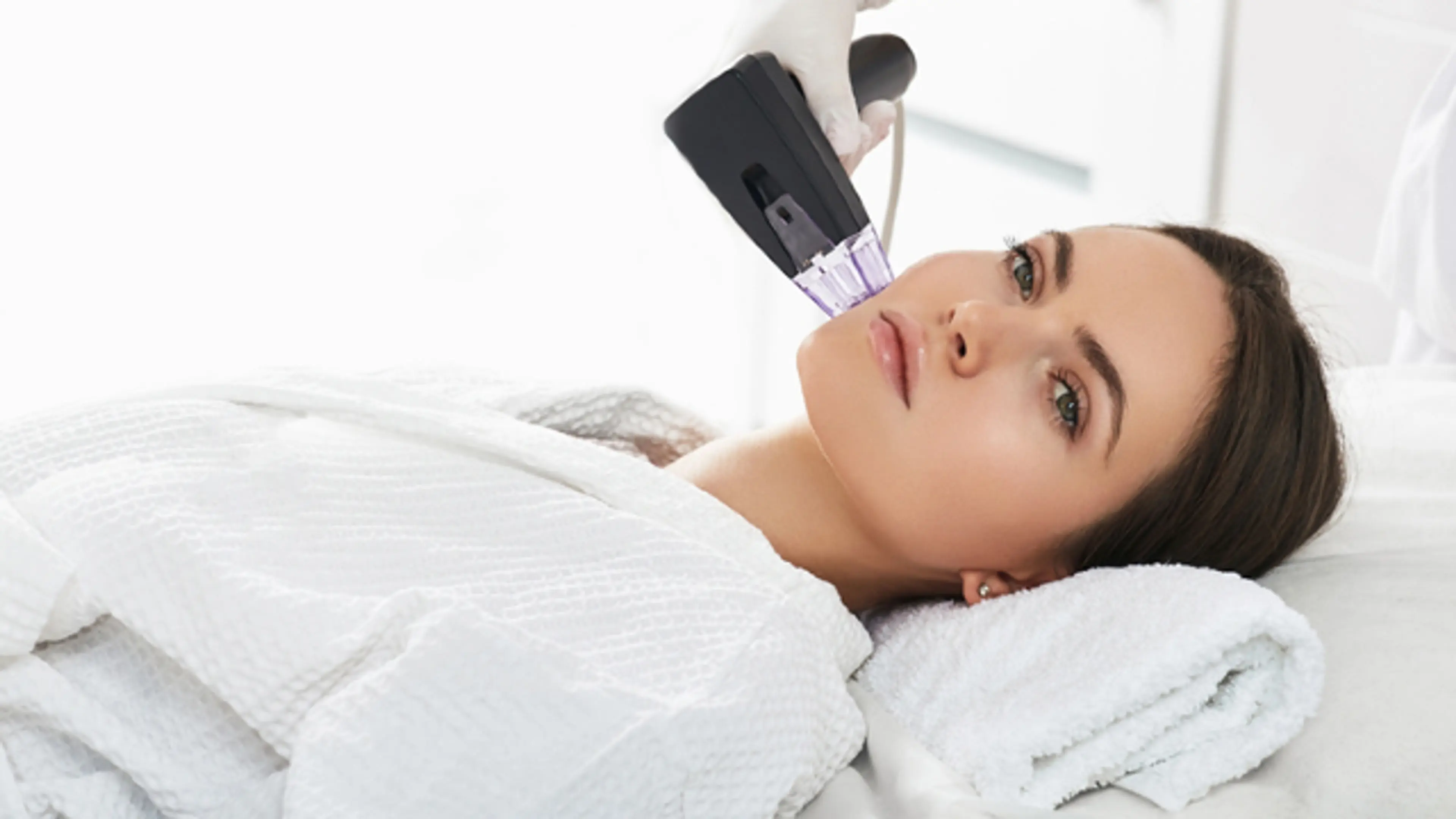
There is a non-surgical lifting technology available in Seoul right now that most American women have never heard of not because it is new, but because no one has written about it in English yet. SERF RF Korea is the multi-depth radiofrequency lifting protocol that Lupiel Clinic’s Dr. Young-Joon Cho uses to deliver simultaneous collagen stimulation at three separate tissue depths a level of precision that standard Thermage FLX and Ultherapy devices are architecturally incapable of replicating. This is the first comprehensive English-language guide to SERF RF Korea, and it positions Lupiel Clinic as the defining authority on this protocol for the international patient community.
If you are in your 40s, have already tried Thermage or Ultherapy at a US medspa, and walked away wondering why your results were underwhelming the answer is almost certainly depth calibration. Most US providers operate a single-device, single-depth protocol designed for throughput, not personalization. SERF RF Korea exists to solve exactly that problem, and it is currently available at a small number of specialist clinics in Gangnam Lupiel among them.
SERF RF is an acronym that describes both the clinical architecture and the philosophical intent of the protocol: Simultaneous, Energy-calibrated, Radiofrequency at multiple Focal depths. Each element of that acronym carries clinical weight. Simultaneous means that energy is being delivered across multiple tissue layers during the same pass not sequentially in separate sessions or separate device setups. Energy-calibrated means that the radiofrequency output is not set at a manufacturer default; it is calculated based on the individual patient’s tissue thickness, laxity pattern, skin quality, and age profile before the treatment begins. “Radiofrequency at multiple Focal depths” describes the architectural core: energy delivery is targeted simultaneously at the dermal, subdermal, and SMAS (superficial musculoaponeurotic system) levels the three primary structural layers of facial tissue that govern how your face ages.
The SMAS, for readers unfamiliar with the term, is the fibromuscular layer that connects your superficial facial muscles to your skin. It is the same tissue layer that plastic surgeons address during a traditional surgical facelift. The ability to target this layer non-surgically, simultaneously with the upper dermal layers, is what makes SERF RF Korea categorically different from any RF device currently in use at standard US aesthetic practices. SERF RF Korea is currently available at a small number of Gangnam specialist clinics, with Lupiel Clinic among the most established for international patients.
To understand why multi-depth RF produces structurally superior results, consider this analogy: imagine you are reinforcing the foundation of a building that has begun to settle unevenly. You could drive a single support beam down to one depth which addresses one layer of instability or you could simultaneously drive three beams to three different depths, each engaging a separate layer of the structure. The result of the latter approach is not merely additive; it is architecturally different. The foundation holds at every depth simultaneously, and the structural response is more comprehensive and more durable.
This is exactly the difference between standard single-depth RF and SERF RF Korea. Conventional RF devices including the Thermage FLX as it is typically deployed at US medspas deliver energy at one tissue depth per pass. Even when the device is technically capable of varying depth settings between sessions, each individual pass still targets a single layer. The body’s collagen remodeling response is triggered at that layer alone. With multi-depth simultaneous RF, the thermal stimulus reaches three tissue layers at once, triggering a broader and more sustained cascade of collagen remodeling across the full structural depth of the face. The biological response is not just wider it is deeper, longer-lasting, and more anatomically meaningful.
It is important to note that US medspas typically operate Thermage FLX and similar devices at manufacturer-default settings. The protocol is standardized for operational efficiency a 60-minute session, a preset energy level, a technician or aesthetician managing delivery. Lupiel’s SERF RF protocol is fundamentally different: it is physician-calibrated per patient anatomy, with Dr. Young-Joon Cho determining the energy map before every session based on individual tissue assessment.
The direct answer is no. SERF RF as a personalized, physician-calibrated, multi-depth RF protocol is not offered at standard US medspas or dermatology practices. This is not primarily a device-availability issue it is a specialization and delivery model issue.
American aesthetic providers typically offer 40 or more device types across their treatment menus. In this model, each device is one option in a broad menu, operated by a licensed aesthetician or nurse at manufacturer-recommended settings. There is neither the clinical infrastructure nor the economic incentive to build a physician-directed, anatomy-specific, multi-depth protocol around any single technology. The result which Lauren, a 44-year-old New Yorker who has tried two Thermage sessions at Manhattan medspas, has experienced firsthand is what she has described as a “conveyor belt” experience: technically competent, but not personalized, and not producing the structural results she was expecting.
Lupiel’s Dr. Young-Joon Cho has built his clinical practice around a curated protocol stack of three to five devices, each deployed at physician-directed depth calibration. This is not a common approach even in Korea it is specific to a subset of highly specialized Gangnam clinics. The specialization gap, not simply device availability, is what separates Seoul SERF RF outcomes from US RF outcomes.
Radiofrequency devices produce lifting and tightening results through a mechanism called controlled thermal injury a carefully calibrated application of heat to specific tissue layers that triggers the body’s natural wound-healing cascade. When RF energy heats the dermal and subdermal tissue to therapeutic temperatures (typically between 60°C and 70°C in the target zone), the body responds by initiating collagen repair and synthesis, exactly as it would in response to a minor wound but without breaking the skin surface.
The collagen remodeling response unfolds in three distinct phases. In the immediate phase (days one through seven), existing collagen fibers contract as a result of the thermal stimulus, producing the mild “instant firmness” that patients sometimes notice immediately after treatment. In the early neocollagenesis phase (weeks two through eight), fibroblast cells in the treated tissue begin synthesizing new collagen specifically Type I and Type III collagen, which are the structural proteins responsible for skin firmness and elasticity. In the long-term structural remodeling phase (months three through twelve), this new collagen matures and organizes into a denser, more structured extracellular matrix, producing the progressive lift and tissue quality improvement that patients observe over the following months.
Multi-depth simultaneous heating accelerates and deepens this response in a clinically meaningful way. When thermal stimulus reaches all three tissue layers at once, the fibroblast activation and collagen synthesis cascade is triggered across the full structural depth simultaneously not sequentially. The result is a broader and more sustained remodeling response, with peak visible results typically appearing between months four and six. It is important to set realistic expectations here: SERF RF Korea results are progressive, not immediate. The structural improvements you are investing in today will continue developing for up to six months post-treatment.
Understanding what is happening at each tissue level helps explain why simultaneous multi-depth targeting is structurally superior to any single-layer approach.
Delivering RF energy to the SMAS level is not without risk if performed incorrectly. Multi-depth RF at SMAS level carries a therapeutic window a narrow range of energy parameters within which the treatment produces the desired collagen stimulus. Energy delivery that is too shallow produces only surface-level results; energy delivery that is too deep risks thermal injury to underlying nerves and structures. This narrow therapeutic window is precisely why SERF RF Korea must be physician-directed, not medspa-aesthetician-operated.
SERF RF Korea is architecturally different from both. It is a multi-depth RF protocol meaning energy is delivered simultaneously across three tissue levels in a single pass. This is not a different brand of the same technology; it is a different approach to energy delivery, physician calibration, and treatment design entirely.
Feature | Thermage FLX | Ultherapy | SERF RF Korea (Lupiel) |
|---|---|---|---|
Technology Type | Monopolar RF | HIFU (Ultrasound) | Multi-Depth RF |
Tissue Depths Targeted | 1 (adjustable) | 1–3 (sequential) | 3 (simultaneous) |
SMAS-Level Targeting | Partial | Yes (focal) | Yes (full-field) |
Physician Calibration | Rarely at US medspas | Rarely at US medspas | Yes — every session at Lupiel |
Downtime | None | None–mild | None |
Results Timeline | 3–6 months | 3–6 months | 3–6 months |
Session Duration | 60–90 min | 60–90 min | 45–75 min |
Pain Level | Moderate | Moderate–High | Low–Moderate |
US Availability | Yes | Yes | No (Seoul only) |
Average US Price | $3,500–$5,000 | $3,000–$4,500 | See Section 6 |
For a patient in her mid-40s let us use Lauren’s profile as the reference point: 44 years old, early-to-moderate laxity, good overall skin quality, with specific concerns about jawline definition, periorbital texture changes, and midface descent the architectural differences between these three technologies translate directly into outcome differences.
Thermage FLX and Ultherapy are both excellent, well-validated technologies. This is an important point to make honestly: neither device is ineffective. The issue is not device quality; it is depth coverage and delivery model. Thermage FLX, deployed at manufacturer default settings by a medspa aesthetician, will produce surface-to-mid-dermal results in a single pass. It will not simultaneously address the subdermal layer and the SMAS in the same session. Ultherapy, which does reach the SMAS via focal ultrasound, creates discrete coagulation points rather than full-field heating across the SMAS plane the collagen stimulus is focal rather than distributed. For early-to-moderate laxity in a 44-year-old, the difference in coverage area matters significantly for jawline and midface results.
SERF RF Korea’s simultaneous multi-depth protocol addresses all three tissue levels in a single session, with physician-calibrated energy parameters designed for Lauren’s specific anatomy. For someone at her stage of aging and with her specific concern profile, this means one treatment is achieving what would otherwise require combining Thermage FLX, a subdermal heating device, and a separate SMAS-targeting modality — in separate sessions, at separate costs, with a generalist operating each one.
For a patient at Diane’s stage 52 years old, with more established laxity SERF RF Korea serves as the optimal non-surgical complement to upper blepharoplasty in a combined Seoul treatment trip. The surgical correction of upper eyelid laxity combined with SERF RF Korea addressing the mid and lower face provides comprehensive rejuvenation that neither approach can achieve alone. See our companion guide on [upper blepharoplasty at Lupiel Clinic] for the full surgical protocol detail.
SERF RF Korea produces peak results in patients between the ages of 35 and 60, with the strongest outcomes typically seen in patients in their 40s presenting with early-to-moderate facial laxity. The skin conditions that respond best to the SERF RF protocol include loss of jawline definition, nasolabial fold deepening, early jowl formation, midface descent, and periorbital texture changes precisely the concerns that women in this age group most commonly report when they arrive at Lupiel for consultation.
SERF RF Korea is appropriate for all Fitzpatrick skin types the Fitzpatrick scale being the clinical classification system that rates skin tone from Type I (very fair, always burns) through Type VI (deeply pigmented, never burns). This is a clinically important point for Lupiel’s US patient community: the protocol is equally suitable for the Hispanic-American and Caucasian-American patient profiles that represent a significant portion of the clinic’s international patient base. Unlike some energy-based devices that carry a risk of post-inflammatory hyperpigmentation (PIH) in darker skin tones, SERF RF Korea’s controlled thermal delivery does not target melanin, making it a safe and effective option across the full range of skin tones.
From a lifestyle perspective, the ideal SERF RF Korea patient is someone who requires zero downtime a professional woman who cannot take days away from work for recovery, who wants results that improve progressively over three to six months rather than an overnight dramatic change, and who values the kind of natural-looking outcome that reads as “well-rested” rather than “treated.”
Clinical honesty requires stating this clearly: SERF RF Korea is not appropriate for every patient who arrives requesting it, and Dr. Young-Joon Cho will not recommend it when it does not serve the patient’s clinical needs.
Patients with severe, advanced facial laxity where tissue has descended beyond what non-surgical energy devices can meaningfully address are more appropriately served by surgical intervention, and Dr. Cho will say so directly. Patients with active skin infections, inflammatory acne, or open lesions in the proposed treatment area are not suitable candidates until those conditions are resolved. Patients who are pregnant or breastfeeding should not undergo any energy-based thermal treatment. Patients with certain metal implants in or near the treatment zone require individual assessment before any RF treatment can proceed.
The important reassurance here is structural: “Dr. Young-Joon Cho will assess your suitability during your pre-treatment consultation and will not recommend a treatment that does not serve your clinical needs even if you arrive requesting it.” This is not a sales environment. It is a specialist clinical practice, and your consultation will reflect that.
One of the more significant strategic advantages of traveling to Lupiel Clinic for SERF RF Korea is the ability to combine multiple complementary protocols within a single Seoul visit. Depending on treatment area overlap and individual skin condition, SERF RF Korea can be performed in combination with the [Revive Skin Booster protocol at Lupiel] which amplifies the regenerative response by delivering targeted hydration and growth factors to the treated tissue in the same session as well as Thermage FLX and PDO thread lifting within the same visit.
For patients whose treatment goals include both the face and the periorbital region, Lupiel’s two-physician model offers a clinical advantage that no US provider can replicate: Dr. Byung-Chil Cho, board-certified plastic surgeon and Director of Lupiel Clinic, can collaborate with Dr. Young-Joon Cho on a combined surgical and non-surgical protocol upper blepharoplasty performed by Dr. Byung-Chil Cho alongside SERF RF Korea delivered by Dr. Young-Joon Cho within a single Seoul trip. This integrated approach is specific to Lupiel and is a primary reason international patients with complex multi-area concerns choose this clinic over higher-volume Gangnam competitors.
For Lauren’s profile specifically 44 years old, NYC-based, no surgical goals at this stage the recommended Seoul combination protocol is SERF RF Korea plus Revive Skin Booster plus Thermage FLX over a five-to-seven day Seoul visit, delivering comprehensive non-surgical lifting and skin quality improvement across all three tissue levels simultaneously.
One of the most common points of confusion for patients who have previously undergone RF lifting in the US is the timeline of results. Structural collagen remodeling is not a process you can rush and understanding when to look for what kind of change helps prevent the discouragement that sometimes leads patients to incorrectly conclude a treatment has not worked.
Timeframe | What You’ll Experience | Clinical Explanation |
|---|---|---|
Treatment Day | Mild warmth, possible light redness, immediate mild firmness | Thermal response, early tissue contraction |
Days 1–7 | Skin feels slightly tighter, minimal visible change | Inflammation phase, collagen activation begins |
Weeks 2–4 | Early visible tightening, improved skin texture | Early neocollagenesis phase begins |
Months 2–3 | Progressive lift, jawline definition emerging | Mid-phase collagen remodeling |
Months 4–6 | Peak visible results — structural lift, skin quality improvement | Full collagen maturation |
Months 6–12 | Results maintained with single annual maintenance session | Long-term remodeling sustained |
The absence of dramatic immediate change is not a sign that the treatment has not worked it is a sign that the biological process is proceeding correctly. The thermal stimulus has been delivered, the cascade has been triggered, and your body is now doing the structural work. The results you will see at month four are the product of a collagen remodeling response that has been building since treatment day.
For patients in the 35–44 age range Lauren’s profile SERF RF Korea typically produces excellent outcomes. Early intervention matters significantly in RF lifting: the more collagen-producing capacity your fibroblasts retain, the more robust the neocollagenesis response. Patients in this age group can typically expect visible jawline definition improvement, midface contour refinement, and meaningful skin quality enhancement. A single annual maintenance session is typically sufficient to sustain these results long-term.
For patients in the 45–52 range Diane’s profile SERF RF Korea remains a very strong option, with the clinical note that more established laxity may require Dr. Cho to calibrate deeper energy delivery and may warrant one to two sessions in the first twelve months rather than one. For patients at this stage who are also considering surgical options, the combined SERF RF Korea plus blepharoplasty protocol described in Section 4 provides comprehensive rejuvenation that either approach alone cannot achieve.
In all cases, results vary based on individual skin quality, age, lifestyle factors, and adherence to post-treatment skincare protocols. In most cases, patients experience meaningful visible improvement within two to three months, with peak results appearing between months four and six. These are realistic parameters, not guarantees.
A 44-year-old professional from New York who had previously undergone two Thermage sessions at a Manhattan medspa reported, after her first SERF RF Korea session at Lupiel, that the structural change in her jawline at three months post-treatment was “more than she had seen from both previous Thermage sessions combined” a clinical observation that aligns with what Dr. Cho consistently reports from patients who transition from single-depth US RF protocols to the multi-depth SERF RF approach.
The visible changes documented in SERF RF Korea before/after photography at Lupiel typically include improved jawline definition with reduction in early jowl prominence, midface contour lift with softened nasolabial folds, and an overall improvement in skin texture and luminosity that reflects the dermal-level collagen response. What they do not show and this is by design is dramatic facial transformation. SERF RF Korea is a restoration protocol, not a reconstruction one.
Transparent pricing is a commitment at Lupiel Clinic, and the following estimates reflect current USD-equivalent costs as of March 2026. All prices are subject to KRW/USD exchange rate fluctuation of approximately ±5–10%, and a personalized written quote in USD is available from Lupiel’s international patient coordinator before any booking commitment is required.
Treatment | Estimated Price (USD) | Notes |
|---|---|---|
SERF RF Korea — Single Session | $800–$1,400 | Physician-calibrated, full-face protocol |
SERF RF Korea + Skin Booster Combination | $1,200–$2,000 | Same-day combination — most popular for US patients |
SERF RF Korea + Thermage FLX Combination | $2,000–$3,200 | Maximum non-surgical lifting protocol |
SERF RF Korea + Full Combination Protocol | $2,500–$4,000 | SERF RF + Thermage FLX + Skin Booster |
Comparable US Price (Thermage FLX alone) | $3,500–$5,000 | Reference only — single device, single session |
The reference comparison in the final row is worth pausing on. A single Thermage FLX session at a Manhattan medspa one device, one depth, aesthetician-operated at default settings costs between $3,500 and $5,000. The full SERF RF Korea combination protocol at Lupiel Clinic three tissue depths, physician-calibrated, combined with a Thermage FLX and Skin Booster in the same visit costs between $2,500 and $4,000. For a full picture of how Seoul compares to US pricing across all aesthetic treatments, see our [full Korea vs USA cost comparison].
South Korea removed the VAT refund for cosmetic medical procedures in January 2026, a change that directly affects the out-of-pocket cost for foreign patients visiting Korean aesthetic clinics. This deserves transparent acknowledgment: prior to January 2026, foreign patients could reclaim approximately 10% of procedure costs through the VAT refund system on departure. That refund pathway is no longer available for cosmetic procedures.
The practical impact is a cost increase of approximately 10% on procedure costs compared to the pre-January 2026 pricing that may appear in older online reviews or travel guides. However, even with this adjustment fully applied, SERF RF Korea at Lupiel Clinic remains approximately 30% below equivalent Western pricing for a comparable though architecturally single-depth RF session. The value proposition for the US patient is intact; the calculus has simply shifted slightly. Lupiel’s international patient coordinator will provide full cost transparency, including current VAT status, before any booking commitment is required.
The most useful cost framework for a US patient evaluating SERF RF Korea is not the procedure price in isolation it is the all-in investment for the Seoul trip compared to what the same budget would achieve domestically.
Line Item | Estimated Cost (USD) |
|---|---|
Round-trip flight (NYC / LA / Chicago / Houston / Phoenix) | $900–$1,400 |
Accommodation 5–7 nights, Gangnam | $1,200–$2,100 |
SERF RF Korea + Full Combination Protocol | $2,500–$4,000 |
Incidentals / meals / tourism | $800–$1,200 |
Total All-In | $5,400–$8,700 |
For context: a single Thermage FLX session in Manhattan costs $3,500–$5,000 one device, one depth, one session. For the all-in Seoul investment, a US patient receives physician-directed multi-depth SERF RF Korea, a Thermage FLX session, a Revive Skin Booster protocol, and seven days in one of the world’s most compelling cities. The clinical scope is categorically broader. The total investment is frequently comparable to or less than what a New Yorker would spend on two standard RF sessions at a Manhattan medspa across a calendar year.
What distinguishes Dr. Cho’s clinical practice is not his device library it is his approach to deploying technology. His philosophy is explicit: “Every patient’s face has a different structural story. My job is to read that story before I design the treatment.” This philosophy is operationalized through the depth calibration assessment that precedes every SERF RF session, the 1:1 treatment model that means no technician or aesthetician delivers treatments at Lupiel, and the post-treatment follow-up structure that ensures international patients have clinical support after they return home. Every treatment at Lupiel is physician-directed at every stage assessment, calibration, delivery, and follow-up.
The 1:1 physician model at Lupiel is not a marketing claim it is a structural feature of how the clinic operates, and it has direct clinical consequences for SERF RF Korea outcomes.
At most American medspa chains and at many high-volume Korean aesthetic clinics, RF treatments are delivered by licensed aestheticians or nurses operating devices at manufacturer-default settings. The physician may have conducted an initial consultation, but they are not present during the treatment. The depth parameters are not individually calibrated. This model is operationally efficient and is the norm across the aesthetic industry in both countries.
At Lupiel, Dr. Young-Joon Cho personally conducts the pre-treatment tissue assessment, personally sets the SERF RF depth parameters based on that assessment, and is present throughout the treatment session. For a protocol in which depth calibration is the primary determinant of clinical outcome as it is with multi-depth RF targeting the SMAS level the physician’s presence and direct oversight is not a premium amenity. It is a clinical requirement.
This is not a standard feature of Korean aesthetic clinics broadly. It is specific to Lupiel’s 1:1 philosophy and is consistently cited by international patients as the primary reason they chose Lupiel over higher-volume Gangnam alternatives.
Lupiel Clinic provides full clinical communication in English at every patient touchpoint consultation, pre-treatment assessment, treatment day briefing, and follow-up. The clinic’s international patient coordinator is available for pre-trip consultation scheduling, travel guidance, and accommodation recommendations in the Gangnam-gu area. A free virtual consultation is available to international patients before any flight is booked conducted in English, covering treatment suitability, expected outcomes, recommended protocol, and itemized cost estimate. Post-treatment follow-up for international patients includes structured check-ins at 48 hours, two weeks, and three months after treatment providing clinical continuity across time zones. Contact channels include the clinic website, WhatsApp, email, and phone, all English-responsive. For additional perspective from US patients navigating the Seoul aesthetic market, our [New York patients’ guide to Seoul aesthetics] provides a detailed logistics and experience overview.
The first step requires no flight, no payment, and no commitment. Lupiel’s free virtual consultation is conducted in English either directly with Dr. Young-Joon Cho or with the clinic’s English-speaking international patient coordinator and covers everything you need to make an informed decision before booking travel. In your consultation, you will discuss your specific skin concerns and treatment history, receive an honest assessment of whether SERF RF Korea is appropriate for your anatomy and goals, understand what a realistic results timeline looks like for your age and skin profile, receive a recommended protocol, and receive an itemized cost estimate in USD. Lupiel aims to respond to all international patient inquiries within 24 hours. You can book your consultation via the website consultation form, WhatsApp, or email all channels are English-responsive.
Following your virtual consultation, Lupiel will provide a written treatment plan in English. This document includes your recommended treatment sequence, per-treatment pricing in USD, expected recovery timeline, and a pre-treatment preparation checklist. Critically, this written plan is provided before any payment or booking commitment is required. You are under no obligation to proceed, and you may share the document with your US physician for independent review before making any decision. The written treatment plan commitment is one of Lupiel’s distinguishing features for international patients and reflects the clinic’s operating principle: you make informed decisions with full information in your hands, not under time pressure.
SERF RF Korea is a multi-depth radiofrequency lifting protocol that delivers simultaneous energy at three tissue levels dermis, subdermal, and SMAS within a single physician-calibrated session. Standard RF devices target one tissue depth per pass, producing a narrower and shallower collagen remodeling response than SERF RF Korea’s simultaneous multi-layer approach.
SERF RF Korea as a personalized, physician-calibrated, multi-depth protocol is not available at US medspas or dermatology practices. The specialization model required to deliver SERF RF at clinical standard physician-directed depth calibration per patient anatomy does not exist within the standard US aesthetic medspa framework. Seoul, specifically Gangnam, is currently the only location where this non-surgical lifting protocol is available.
In most cases, a single SERF RF Korea session is sufficient to initiate the multi-depth collagen stimulation cascade, with peak results appearing at months four to six. Patients in the 45–52 age range with more established laxity may benefit from one to two sessions in the first twelve months. Dr. Young-Joon Cho will provide a specific session recommendation based on your anatomy and goals during your virtual consultation.
Yes and for most patients, combination therapy is the recommended approach. SERF RF lifting Seoul can be effectively combined with the Revive Skin Booster, Thermage FLX, and PDO thread lifting depending on treatment area. For patients also considering surgery, a combined blepharoplasty and SERF RF protocol is available through Lupiel’s two-physician model. Your written treatment plan will detail the optimal combination for your specific goals.
SERF RF Korea cost at Lupiel Clinic ranges from approximately $800–$1,400 for a single full-face session to $2,500–$4,000 for the full combination protocol including Thermage FLX and Skin Booster. All prices are USD equivalents subject to KRW/USD exchange rate fluctuation. Request a written USD quote from Lupiel’s international coordinator before booking.
Yes South Korea’s removal of the VAT refund for cosmetic procedures in January 2026 adds approximately 10% to out-of-pocket costs for foreign patients compared to pre-2026 pricing. However, even with this adjustment, SERF RF Korea 2026 pricing at Lupiel remains approximately 30% below equivalent single-depth RF pricing in the US market. Lupiel’s coordinator will provide current pricing with VAT included in your written quote.
For a 44-year-old with early-to-moderate laxity and concerns about jawline definition and midface descent, SERF RF Korea offers broader clinical coverage than Thermage FLX Korea as a standalone treatment. While Thermage FLX is an excellent device, it delivers RF energy at a single depth per pass. SERF RF Korea simultaneously addresses all three tissue levels dermis, subdermal, and SMAS in a single physician-calibrated session, producing structural results that a single-depth device cannot replicate.
SERF RF Korea is a zero-downtime procedure for the vast majority of patients. On treatment day, you may experience mild warmth and light redness that typically resolves within a few hours. In most cases, patients return to normal professional and social activity the same day. This makes SERF RF Korea non-surgical lifting Korea a particularly practical option for working professionals who cannot accommodate recovery time.
Yes. The SERF RF lifting Seoul protocol at Lupiel is physician-performed throughout. Dr. Young-Joon Cho personally conducts your pre-treatment tissue assessment, personally calibrates the multi-depth energy parameters, and is present during the full treatment session. Lupiel’s 1:1 consultation model means you meet your treating physician at every stage not a coordinator or technician.
Yes a free virtual consultation in English is available to all international patients before any flight is booked. You will receive an honest suitability assessment, a recommended SERF RF Korea protocol, a realistic results timeline, and an itemized USD cost estimate. Contact Lupiel Clinic via the website, WhatsApp, or email to schedule. Response time is within 24 hours for all international inquiries.
SERF RF Korea is the only multi-depth personalized RF lifting protocol available to US patients and Lupiel Clinic in Gangnam-gu, Seoul is where it is delivered with physician-directed precision that the standard US aesthetic model is structurally unable to replicate. For women in their 40s experiencing early-to-moderate facial laxity, SERF RF Korea addresses all three tissue layers simultaneously dermis, subdermal, and SMAS delivering structural results that single-depth US devices cannot achieve in a single session. At approximately 30% below Western equivalent pricing even after the 2026 VAT adjustment, the all-in Seoul treatment investment is comparable to a single Thermage session in Manhattan with a dramatically broader clinical scope, a physician-directed delivery model, and zero downtime.
Dr. Young-Joon Cho has built Lupiel Clinic’s SERF RF Korea protocol around one principle: every patient’s face is anatomically unique, and every treatment plan should reflect that not a manufacturer’s default setting. In most cases, the patients who see the most meaningful results are those who arrive with realistic expectations, a clear understanding of the three-to-six month results timeline, and a treatment plan that has been calibrated to their specific anatomy rather than a standard protocol template.
If you are ready to explore whether SERF RF Korea is right for your skin, the next step is a free virtual consultation with Lupiel’s English-speaking team no commitment required, no flight booked until you have a written treatment plan in your hands. Contact Lupiel Clinic today via WhatsApp, email, or the website consultation form. SERF RF Korea is available now, and the conversation starts before you book the flight.