Home / Articles
Combination Lifting Korea 2026: Multi-Treatment Protocol Guide
Home / Articles
Combination Lifting Korea 2026: Multi-Treatment Protocol Guide
You've researched upper blepharoplasty in Chicago and found quotes between $8,500 and $22,000. You've read about Thermage FLX and skin regeneration treatments. You've discovered that Korean aesthetic medicine is ahead of the US curve. But here's what most American patients don't know: the real power of Korean anti-aging isn't any single treatment. It's the ability to layer multiple complementary modalities into one integrated protocol designed specifically for your face and your aging patterns.
If you're a woman in your late 40s or 50s considering aesthetic treatment, you're facing a fragmented experience in the US. One doctor recommends Botox, another suggests fillers, a third mentions a thread lift, and none of them are orchestrating a comprehensive strategy. You end up bouncing between providers, paying separately for each treatment, and never receiving the kind of fully personalized, multi-dimensional approach that addresses skin quality, volume loss, and structural laxity simultaneously. This piecemeal approach leaves you with incomplete results and accumulating costs.
Dr. Byung-Chil Cho has spent over 30 years designing individualized aesthetic protocols for patients across Asia and internationally, performing over 400 surgical and non-surgical procedures annually. As a board-certified plastic surgeon specializing in facial rejuvenation, Dr. Cho doesn't follow templates. He builds protocols around each patient's unique anatomy, skin quality, and aging patterns, which is why combination lifting has become his signature approach for patients like you who want comprehensive, lasting results.
Single treatments have become the standard in US aesthetic medicine, but they address only one dimension of aging. Your face ages across multiple layers simultaneously. Your skin quality deteriorates from collagen loss. Your mid-face descends from volume loss. Your jawline softens from structural elasticity loss. Your under-eye area develops laxity. A single treatment—whether Thermage FLX alone, blepharoplasty alone, or threads alone—addresses only one of these concerns.
Consider Thermage FLX as an example. It's an excellent technology that tightens skin and stimulates collagen. But here's what it doesn't do: it doesn't provide immediate structural lift, and it doesn't address volume loss in the cheeks and jawline. I've observed that patients who received Thermage FLX alone in the US often returned within 18 months disappointed. Their skin had tightened, but their mid-face had continued to descend. Their jawline still looked soft. They looked incrementally better, not transformed. This is where combination lifting korea protocols change everything. Instead of addressing one layer of aging, you address all of them at once.
When you understand how aging happens at different skin depths and timelines, the logic of combination protocols becomes obvious. Your skin ages in layers. The superficial dermis—the outermost layer—loses collagen and develops fine lines. The mid-dermis loses elasticity, causing skin laxity and sagging. The deep dermis and subdermis lose structural support, allowing your face to descend. Different devices trigger regeneration at different depths and timelines, which is why layering them creates compounding results.
SERF RF penetrates your dermis at multiple precise depths simultaneously. It's called "multi-depth" because it doesn't just heat your skin uniformly—it delivers controlled radiofrequency energy at the superficial, mid, and deep dermal levels all in one treatment. This triggers collagen regeneration across the full thickness of your dermis. Thermage FLX targets the deeper dermal-subdermal junction specifically, creating both immediate thermal contraction and long-term collagen remodeling at that deeper level. PDO threads provide immediate mechanical lift and structural support while your body gradually absorbs the threads over 6 to 9 months, replacing them with new collagen.
Here's the magic: these three timelines stack. Threads work immediately. SERF RF begins showing results at 2 to 3 weeks and continues improving through 6 months. Thermage works on a similar timeline but emphasizes deeper structural tightening. By month three, you're seeing compounding results from all three sources simultaneously—mechanical lift from threads, multi-depth collagen regeneration from SERF RF, and deep structural tightening from Thermage. Dr. Byung-Chil Cho explains it this way: "When you layer SERF RF, Thermage FLX, and PDO threads, you're not just adding treatments. You're orchestrating a collagen regeneration symphony. Each device triggers different biological responses at different depths and timelines, so by month three, you're seeing compounding results that no single treatment could achieve. A patient who gets SERF RF and Thermage alone might see 60 percent of the lift she could achieve with the full protocol."
A patient receiving a true combination lifting korea protocol—SERF RF plus Thermage FLX plus PDO threads—experiences comprehensive transformation. Her skin quality improves noticeably from the collagen regeneration. Her mid-face lifts from the structural support of threads and the tightening from both RF devices. Her jawline becomes defined and structured. Her overall appearance is fresher, more lifted, and more sculpted. The results look natural because all dimensions of aging are being addressed simultaneously, not piecemeal.
A real-world example: a 52-year-old woman presented with skin laxity, midface descent, upper eyelid hooding, and concern about looking "done." A combination protocol was designed to address all four concerns. Six months later, her brow height had improved by approximately 15 degrees. Her jawline was visibly restored. Her skin quality looked radiant rather than tired. Her upper eyelids had some improvement in hooding from the overall facial lift and skin tightening. Most importantly, she looked like herself—just the best version of herself. She didn't look pulled or artificially transformed.
At Lupiel, a combination lifting korea protocol doesn't come from a menu. It comes from a 90-minute consultation, entirely with Dr. Byung-Chil Cho or Dr. Young-Joon Cho. Not a coordinator. Not a consultant. Your actual treating physician.
During this consultation, the doctor examines your face methodically. He assesses your skin texture and thickness. He evaluates your elasticity by gently stretching your skin and watching how it rebounds. He maps your volume loss pattern—where you've lost fullness and where you have descent. He positions your brow, jawline, and under-eye area relative to ideal aesthetics and relative to your baseline. He looks at your skin tone, any sun damage, and any prior procedures.
Then he asks you questions. Not from a script. In conversation. "What bothers you most about your face right now?" and "What does success look like to you?" and "Are you concerned about looking like you've had surgery?" and "How much downtime can you realistically manage?" Your answers shape the protocol directly.
The doctor then reasons aloud. "Based on your skin type, which is somewhat thin and sensitive, SERF RF at moderate settings will rebuild collagen depth without over-stimulating your skin. Thermage FLX will give you deeper structural tightening, especially in your mid-face and jawline. PDO threads—specifically here on your jawline and here on your cheekbones—will provide the immediate scaffolding to support that tightening while it's happening. Here's why each layer matters for your specific anatomy." The doctor draws on a diagram. He shows you the depths of penetration. He explains the timeline. He answers your questions.
By the end of the consultation, you leave with a written protocol in English. It itemizes each treatment. It explains the sequencing and why that order matters. It outlines realistic recovery expectations. It describes exactly what to expect at each timepoint. You're not signing up for a mystery. You have a plan. You have time to think about it, email questions, discuss it with family, review it with your US doctor if you want to. The protocol can be refined if you have concerns. Dr. Byung-Chil Cho describes this process: "Every face is different. Some patients need more volumization. Others need pure lift. Some have thicker skin. Others are thinner-skinned and need gentler protocols. I don't offer a menu. I design a protocol. That design happens in conversation with you, and you leave with a written plan in English that you can share with your family doctor or review as long as you need."
Most high-volume Korean aesthetic clinics operate on templates. They assess a woman in her 40s and prescribe the same protocol as all the other women in their 40s. It's efficient. It's profitable. But it's not personalized. Most clinics don't have time for 90-minute consultations with a physician. They have coordinators conduct 20-minute consultations, then the physician executes a templated plan.
This matters because human faces are not interchangeable. Two women both age 52 may have completely different aging patterns. One may have primarily volume loss; another primarily skin laxity. One may have thick, resilient skin; another thin, sensitive skin. One may want surgical-level transformation; another wants subtle, deniable improvement. A templated protocol will miss the mark for one or both of them.
If you're analytical and detail-oriented—if you value informed consent and customization—the templated approach will frustrate you. You want to know why you're getting each treatment, what it will actually do for you, what the realistic timeline is, and what the recovery will look like. You want to feel like your physician understands your specific face and your specific concerns, not that you're one of fifty identical cases this week.
At Lupiel, you're not. Your protocol is custom-designed. And if you say, "I want only the minimum to see results," the doctor adjusts the protocol accordingly. If you say, "I'm concerned about downtime; what if we skip the PDO threads and do only SERF RF and Thermage," the doctor explains the tradeoff and gives you the choice. Combination protocols are recommendations based on your anatomy and aging patterns, not sales upsells.
Standard radiofrequency heats your dermis and triggers collagen contraction and new collagen production. It's effective, but it treats your entire dermal thickness as a single zone. The energy penetrates throughout, but it doesn't differentiate between your superficial dermis (where fine lines live), your mid-dermis (where elasticity and firmness live), and your deep dermis and subdermis (where structural support lives).
SERF RF stands for Selective Electrical Radiofrequency. The "selective" and "multi-depth" part is crucial. Instead of heating your skin uniformly, SERF RF delivers controlled radiofrequency energy at multiple precise dermal depths simultaneously. It's the evolution of standard RF technology. Traditional RF is like turning up the heat in a room evenly. SERF RF is like adjusting the thermostat at different levels of your skin at the same time.
Why does this matter? Because your skin aging happens at different depths. Fine lines and superficial texture issues live in your superficial dermis. Loss of elasticity and firmness live in your mid-dermis. Structural sagging and descent live in your deep dermis and subdermis. A traditional RF device addresses the overall dermal thickness, but it doesn't discriminate between these zones. SERF RF addresses all three specifically.
This means you get collagen regeneration at the surface for fine lines. You get collagen regeneration in the mid-dermis for elasticity. You get collagen regeneration in the deep dermis for structural support. All in one treatment. The result is more comprehensive lifting and rejuvenation than single-depth RF can achieve. Results begin at 2 to 3 weeks as collagen contraction occurs. Improvement continues through 6 months as new collagen remodels and matures.
SERF RF is currently available first and most extensively in Korea. It's available in some boutique US clinics, but it's not widespread. Lupiel has been using SERF RF since 2023 and has accumulated significant clinical experience with the technology, particularly in layering it with other modalities for combination protocols. Dr. Young-Joon Cho, dermatology and regenerative medicine specialist at Lupiel, explains the technology: "SERF RF is the evolution of standard RF technology. A traditional RF device heats the dermis, but it doesn't discriminate between depths. It's like turning up the heat in a room. SERF RF is like adjusting the thermostat at different levels of your skin simultaneously. This means we get collagen regeneration at the surface for fine lines, the mid-dermis for elasticity, and the deep dermis for structural support. It's a fundamentally more effective approach, and it's why we see results that US patients can't achieve at home."
Thermage FLX is the US FDA-approved radiofrequency device that's most comparable to SERF RF in terms of clinical results, but it approaches the problem differently. Rather than trying to address all dermal depths equally, Thermage FLX focuses specifically on the deeper dermal-subdermal junction. This is the layer where your skin connects to your underlying structural tissues. It's where deep tightening happens and where structural support is built.
Thermage FLX heats this deeper layer to a precise temperature, creating immediate thermal contraction (visible tightening within hours to days) plus long-term collagen remodeling over 6 months. Results are typically a 20 to 30 percent improvement in skin firmness and facial contour, with peak results visible at 6 months. Thermage FLX has been refined significantly over the years, and the current FLX handpiece (the latest generation) is more efficient and comfortable than prior versions.
Korean clinics have accumulated more clinical experience with layering Thermage than most US clinics. They've developed protocols for combining Thermage with other modalities—particularly RF treatments—to maximize results. Why layer SERF RF with Thermage FLX? Because SERF RF handles the full dermal depth (superficial, mid, and deep), while Thermage FLX creates additional deep structural tightening at the dermal-subdermal junction. The two devices work at slightly different depths and through slightly different mechanisms. Together, they create comprehensive lifting across all layers.
SERF RF alone delivers comprehensive collagen regeneration across all dermal depths, but the tightening is progressive and not as dramatic as thermal contraction. Thermage FLX alone delivers strong immediate tightening and deep structural collagen remodeling, but it doesn't address superficial fine lines and mid-dermal elasticity loss as comprehensively as multi-depth RF.
Together, they're formidable. You get multi-depth collagen regeneration from SERF RF. You get additional deep structural tightening from Thermage FLX. You get immediate contraction from Thermage's thermal effect. You get progressive improvement from both devices' collagen remodeling. Patients see improvement starting at 2 weeks (some visible contraction from Thermage, some early collagen regeneration from SERF RF) and continuing through month 6 as full collagen remodeling happens.
The sustained results timeline is also longer. With either device alone, most patients consider maintenance or retreatment at 6 to 9 months. With both devices together, the combination lifting korea protocol typically sustains for 12 to 18 months before maintenance is considered. The layering effect means you have more biological stimulus for sustained collagen production.
PDO stands for polydioxanone. It's an absorbable material that's been used safely in surgical sutures for decades. PDO threads are inserted beneath your skin, typically in specific patterns designed to provide lift and support to areas with descent or laxity. They're not permanent—your body absorbs them over 6 to 9 months.
PDO threads deliver two distinct benefits. First, they provide immediate mechanical lift. Within 24 to 48 hours of insertion, you see visible lifting in the areas where threads are placed. Your jawline looks more defined. Your cheekbones appear higher. Your mid-face has more height. This is direct structural support from the threads themselves. Second, PDO threads trigger collagen regeneration around the threads. As your body absorbs the threads over 6 to 9 months, it replaces them with new collagen. This means your lift isn't just from the thread structure—it's sustained by new collagen long after the threads are gone.
In a combination lifting korea protocol, PDO threads are the structural foundation. SERF RF and Thermage rebuild collagen and create contraction, but gravity continues to pull tissues downward. PDO threads provide the scaffolding that supports that contraction and prevents descent while the 6-month collagen remodeling is happening. Threads are typically placed along the jawline, cheekbones, and under-eye area—the areas where structural support is most needed.
Without PDO threads: SERF RF and Thermage create tightening and new collagen, but gravity is still pulling your tissues downward. Your results improve, but they're incomplete. Your face tightens slightly, but your mid-face still descends because there's no structural support holding it in place while the collagen is remodeling.
With PDO threads: immediate lift prevents descent while RF and Thermage are remodeling. Your threads hold your tissues at a lifted position for 6 months while all that collagen regeneration is happening. By the time the threads are absorbed, the new collagen has matured and is strong enough to maintain the lift on its own. You're not just getting tightening. You're getting structural repositioning that's sustained by collagen regeneration.
The timeline sequencing is elegant. Threads work on day 1. SERF RF begins working at week 2 to 3. Thermage begins working at weeks 2 to 3 as well, with deeper effects developing over 6 months. The patient sees progressive improvement across the full 6-month window because different biological processes are happening at different times, all working together. Dr. Byung-Chil Cho describes it this way: "PDO threads are not a standalone treatment in a combination protocol. They're the structural scaffolding. Think of it this way: SERF RF and Thermage are rebuilding the quality of your skin and creating tightening. PDO threads are making sure that tightening sticks. The threads hold everything in place for 6 months while collagen remodeling happens, then they dissolve and the new collagen sustains what we've built."
On day 1 after your combination lifting korea treatment, you'll have mild swelling and redness. The areas where threads were inserted may show small bumps as your skin adjusts to the threads. The RF and Thermage areas will feel warm, almost like a sunburn, but not painful. Pain is minimal to mild—the thread areas may feel tight, and the RF-treated areas feel warm but manageable with acetaminophen.
Swelling peaks on day 2. You'll likely see 30 to 40 percent swelling at the peak. This sounds dramatic, but it's normal for any skin treatment. Redness will be visible but moderate. You can still recognize yourself in the mirror, but you'll look noticeably swollen and flushed.
Activity during these three days should be restful. No heavy exercise. No hot yoga. No saunas. Head elevated for sleeping helps minimize swelling. Skincare should be minimal—gentle cleansing only, no active ingredients, no heavy moisturizers.
Work during these three days depends on your job. If you're client-facing or on camera, working is not recommended because the swelling is visible. If you work in an office setting with minimal client interaction, you might manage day 3 by keeping your door closed and minimizing meetings. Most patients choose to take days 1 through 3 off work.
Flying after a combination protocol is safe after 24 hours, but it's not recommended if swelling is prominent and you're uncomfortable being seen. If you do fly on day 2 or 3, expect mild additional swelling from cabin pressure and dehydration, which typically resolves within 24 hours of landing.
Day | Swelling Level | Redness | Pain Level | Activity Level | Flying OK? |
|---|---|---|---|---|---|
Day 1 | Mild | Mild | Minimal | Rest | Not recommended |
Day 2 | Peak (30–40%) | Moderate | Mild | Light walking | No |
Day 3 | Starting to decrease | Moderate | Minimal | Light activity | Not recommended |
By day 4, swelling decreases by 50 to 60 percent. Redness fades noticeably. Thread bumps flatten as your skin accommodates the threads. You're approaching a point where makeup can cover remaining redness.
Makeup can return on day 3 to 4 if desired. Redness is mild enough that most women can cover it with foundation and concealer. Work can return to normal office duties by day 4. Client meetings and presentations are reasonable by day 5 to 6 if you're comfortable with mild residual redness. Most women are.
Exercise during this period is light. Walking is fine. Yoga is fine as long as it's not hot yoga and you're not inverting your head. No heavy lifting. No high-intensity interval training. No contact sports. By day 7, moderate exercise (regular gym work, non-heated yoga) becomes reasonable.
Skincare during days 4 through 7 can include gentle active ingredients. Vitamin C serum is fine. Hyaluronic acid is fine. Avoid strong retinoids and chemical exfoliants for 7 days. Your skin barrier is still recovering. Avoid direct sun exposure. Sunscreen is essential if you must be outside.
Swelling is still noticeable—15 to 20 percent of your baseline swelling remains—but it's not dramatic. You look like you've had a good week of rest and sleep. Flying is safe and actually recommended by day 5 to 6. Cabin pressure and dehydration may cause mild additional swelling, which resolves within 24 hours of landing.
By week 2, swelling is minimal. Redness is essentially gone. Results begin to show genuinely. The thread lift is visible. Your jawline looks more defined. Your cheekbones look higher. You're seeing mild tightening from Thermage already, though the true effects are still developing.
Weeks 2 through 4 are when SERF RF really begins showing its collagen regeneration effect. Your skin texture improves noticeably. Pores look smaller. Your skin looks more radiant. The overall quality of your skin improves visibly.
By week 4, approximately 70 to 80 percent of your visible improvement is present. The thread lift is full. SERF RF collagen regeneration is underway and visible. Thermage effects are becoming more pronounced. Continued gradual improvement happens over the following months.
By month 2, Thermage FLX effects become increasingly pronounced as deep collagen remodeling progresses. Your skin looks tighter and more lifted than it did at week 4.
By month 3, you're seeing peak results from the combination. Threads have settled fully. SERF RF collagen regeneration is well underway. Thermage effects are pronounced. Your face looks lifted, sculpted, and rejuvenated without looking pulled or artificial.
Months 3 through 6 bring continued gradual improvement as both RF devices finish their collagen remodeling process. Your results peak around month 6, and then they sustain at that level through month 12 to 18.
Activity | Timeline |
|---|---|
Return to work (office) | Day 3–4 |
Return to work (client-facing) | Day 5–6 |
Light exercise (walking) | Day 3 |
Moderate exercise (gym, yoga) | Day 7 |
Heavy lifting / HIIT | Day 10 |
Sauna / hot tub / hot yoga | Day 10 |
Swimming | Day 14 |
Sleeping on side/stomach | Day 3 (with precaution) |
Full normal activities | Day 14 |
The key point: the "minimal downtime" narrative of combination lifting korea protocols is real. Most patients are functionally normal by day 7. By day 14, you're at full normal activities with no restrictions. This isn't a recovery protocol requiring weeks of isolation.
Sarah is 52, a practicing attorney in Chicago, and she had been considering aesthetic treatment for two years. Her chief concerns were upper eyelid sagging, midface descent, loss of jawline definition, and overall skin laxity from decades of sun exposure during commutes. She wanted to look refreshed, not "done." She'd consulted with surgeons in Chicago; the highest quote for blepharoplasty alone was $22,000. She wasn't interested in full surgical reconstruction—she wanted a refined, natural improvement.
Sarah discovered combination lifting korea protocols through research and reached out to Lupiel for a virtual consultation. During the 30-minute video call with Dr. Byung-Chil Cho, she shared her concerns and aesthetic goals. Dr. Cho reviewed her photos, assessed her skin condition (thick, resilient, with significant sun damage in texture), and recommended a personalized protocol: SERF RF at multi-depth settings to rebuild dermal collagen across all layers, Thermage FLX to create deep structural tightening, and PDO threads on her jawline and cheekbones to provide immediate scaffolding for the other treatments.
Sarah took three weeks to consider the plan. She emailed follow-up questions about recovery, showed the written protocol to her family doctor, and discussed the plan with her husband. She then booked a Seoul trip: 6 days and 5 nights. Day 1 was consultation with Dr. Cho in person (confirming the virtual plan and answering final questions). Day 2 was the full combination protocol treatment. Days 3 through 5 were recovery in Seoul (she did some light sightseeing, mostly rested, and had follow-up check-ins at the clinic). Day 6 was her flight home.
At 1 month post-treatment, Sarah had minimal swelling. Her results were beginning to show. Her jawline was noticeably more defined. Her mid-face had lifted subtly. Her upper eyelids looked less hooded. Her skin looked fresher.
At 3 months, the improvements were more dramatic. SERF RF collagen regeneration had matured. Thermage effects were fully apparent. Her skin texture had transformed—finer, more radiant, more youthful in quality. Her mid-face height was visibly improved. Her jawline was sculpted and defined. Her upper eyelids had experienced a modest lift that opened her eye area naturally.
At 6 months, which is peak results, Sarah's transformation was comprehensive. Her upper eyelid hooding was noticeably less pronounced. Not as dramatic as surgical blepharoplasty would have been, but significant and natural-looking. Her midface was lifted 12 to 15 degrees. Her jawline was sharp and youthful. Her skin quality was dramatically improved—texture, firmness, and radiance all noticeably better.
Most importantly, when Sarah returned to work in Chicago, her colleagues said, "You look rested. You must have had a great vacation." No one thought she'd had a procedure. She looked like herself, just the best version of herself.
Total all-in cost for Sarah: airfare ($800), hotel for 5 nights ($650), combination protocol treatment ($4,200), and meals and incidentals ($300). Total: $5,950. Compare this to a $22,000 Chicago blepharoplasty alone—Sarah received a comprehensive combination lifting korea protocol for less than 27 percent of the cost of a single surgical procedure in the US, with more comprehensive results.
Jessica is 44, a marketing executive in New York, and her concerns were different from Sarah's. Jessica had no dramatic sagging or descent. What bothered her was early skin laxity, persistent fine lines, loss of skin radiance, and very subtle midface descent (noticeable to her, but not to casual observers). She'd done Botox and Thermage FLX in Manhattan over the past three years. The Botox helped with forehead lines. The Thermage helped with skin quality. But the results felt flat and maintenance-focused. She wanted to feel "turned on," not just maintained.
Jessica's virtual consultation with Dr. Young-Joon Cho focused on optimizing a protocol for early aging with emphasis on skin quality and radiance rather than dramatic lift. The protocol recommended was SERF RF with emphasis on superficial and mid-dermal collagen regeneration (to address fine lines and radiance specifically), Thermage FLX at moderate depth settings (to provide subtle structural tightening without over-treating), and a light PDO thread protocol (threads on cheekbones specifically, not a full jawline protocol).
Jessica's Seoul trip was 4 days and 3 nights—shorter than Sarah's because she had less comprehensive needs. Day 1 was consultation and rest. Day 2 was treatment. Days 3 to 4 were recovery and sightseeing. She returned to New York with minimal downtime.
At 1 month, Jessica's fine lines were softened—not erased, but refined. Her skin texture was noticeably smoother. Her skin had a subtle glow.
At 3 months, the full results were apparent. Fine lines: noticeably softened. Skin radiance: dramatically improved. She described it as "a glow I haven't had since my 30s." Subtle lift: her facial contours were slightly higher and more defined. Mid-face: subtle improvement in height; her cheekbones appeared more prominent. Overall aesthetic: refreshed, radiant, youthful without looking altered.
Jessica appreciated the comprehensive approach so much that she scheduled a follow-up SERF RF maintenance session at 8 months post-treatment. She didn't need additional threads or Thermage. The SERF RF alone provided the maintenance she wanted. She'd discovered that a single maintenance treatment, rather than separate Botox and Thermage, gave her better results at comparable cost.
Jessica's total investment for the full Seoul trip, including flights, hotel, treatment, and meals: $4,200. Her maintenance SERF RF 8 months later: $1,400. Total investment over 14 months: $5,600 for comprehensive rejuvenation that left her feeling turned on about her appearance again.
All before and after photos at Lupiel are taken in natural daylight with no filters. The before photo shows minimal makeup; the after photos show the same light makeup level for true comparison. Photography is standardized—same angle, lighting distance, and setup—for accuracy across all timepoints. Every patient has given explicit written consent for photo use, and all identifiable details are removed. No digital enhancement or manipulation is applied to any images.
Results are shown at multiple timepoints: 1 month, 3 months, and 6 months. This approach shows the progressive improvement arc so you can see how results unfold. You're not seeing a single glamour shot with perfect lighting and angles. You're seeing realistic before and afters at consistent intervals.
Why transparency matters: you need to see realistic results, not digitally enhanced images. The photos you see from Lupiel are real patients at real timepoints. This is what you can realistically expect. Not less, and not more.
Dr. Byung-Chil Cho has spent 30 plus years in aesthetic medicine. He performs over 400 surgical and non-surgical procedures annually. He's board-certified as a plastic surgeon and trained extensively in both surgical and non-surgical aesthetic approaches. His specific expertise is facial rejuvenation and designing protocols that look natural.
His philosophy is deceptively simple: a good protocol is invisible. If someone asks you what you had done, you haven't succeeded. If they just say "you look great," you have. This philosophy drives everything he does.
Fifteen years ago, Dr. Cho became frustrated with single-treatment approaches. He'd see patients get Thermage and love the results at 3 months, but by month 9, results faded significantly. Another patient would get threads and appreciate the immediate lift, but the results looked artificial without skin quality improvement from radiofrequency. He began experimenting with layering modalities: RF for collagen, Thermage for deep tightening, threads for structure. The results transformed patients' appearances. That's when he realized: single modalities are incomplete. The future is combination, personalized protocols.
For the past 15 years, he's been perfecting this approach. He's become internationally recognized for combination protocol expertise and teaches other surgeons on the methodology. His specific innovation has been learning how to sequence treatments for maximum synergy and how to customize protocols to individual patients rather than using templates.
Dr. Cho explains his philosophy: "I became interested in combination protocols because I was frustrated. A patient would get Thermage and love the results at 3 months, but by month 9, the results started fading. Another would get threads and appreciate the immediate lift, but the results looked artificial without the skin quality improvement from RF. I started layering: RF for collagen, Thermage for deep tightening, threads for structure. The results transformed. That's when I realized: single modalities are incomplete. The future is combination, personalized protocols. That's what I've been perfecting for 15 years."
Lupiel's primary differentiator is that every patient receives care from a physician, not primarily from coordinators or aestheticians. This starts with your initial consultation. You don't have a 20-minute assessment with a coordinator followed by a physician review. You have a 90-minute direct consultation with Dr. Cho or Dr. Young-Joon Cho. You meet the person who will actually perform your treatment.
On your treatment day, your physician is in the room. He's not handing off to an aesthetician once the numbing agent is applied. He's directing every step of your treatment. He's adjusting SERF RF parameters based on your real-time skin response. He's placing PDO threads with his hands, with his experience, with his judgment.
During your recovery, you receive telemedicine follow-up with your treating physician—not a coordinator—at 2 weeks and 6 weeks. You're not navigating recovery alone or getting generic email responses. You're checking in with the doctor who knows your protocol and your face.
After you return home to the US, you're available via WhatsApp and email for questions. Your physician can arrange a referral to a US-based provider if complications arise (though major complications are rare). You never feel like a transaction. You feel known and cared for by an expert.
English-speaking staff support you throughout consultation, treatment, and recovery. Your patient coordinator is available during your Seoul stay for assistance with hotels, transportation, restaurant recommendations, or any logistical questions. Airport pickup service is available if you want it.
Recovery guidance is detailed and in English. You receive comprehensive recovery guides before your treatment, customized to your specific protocol. Questions are answered thoroughly.
Telemedicine capability means all your post-return home follow-ups happen via video call with your treating physician. You're not figuring out healing on your own. You have structured post-treatment support.
Most importantly, you have 24/7 access via WhatsApp if concerns arise. You're never left thinking, "Who do I contact if something doesn't look right?" You contact Lupiel directly, and your case is handled by your treating physician.
Your journey begins with an initial inquiry. You email or WhatsApp Lupiel with a brief introduction to your concerns and aesthetic goals. You receive an English-language response within 12 to 24 hours. The scheduling team contacts you to arrange a virtual consultation with Dr. Byung-Chil Cho or Dr. Young-Joon Cho.
Your virtual consultation is 30 minutes and included in Lupiel's services—no consultation fee. You connect via video call. Before the call, you submit a few clear photos of your face (frontal, 3/4 view, side view) in natural light. During the call, the doctor reviews your photos with you visible on video. He provides a preliminary assessment of what a combination lifting korea protocol might include for your specific concerns. He discusses timeline expectations, realistic results, recovery, and costs. He answers your questions.
If you want to move forward, the scheduling team sends you a detailed English-language proposal within 2 business days. The proposal itemizes each treatment recommended for you, explains why each is important for your specific anatomy, outlines the timeline and recovery expectations, and provides costs (both for individual treatments and for the combined protocol package discount).
The proposal also includes a comprehensive informational guide titled "What to Expect at Lupiel." This guide covers pre-treatment preparation, exactly what happens on treatment day, expected recovery timeline, post-treatment skincare, and contact information for any questions.
You'll also receive a request to have a 72-hour blood panel done at home before your Seoul trip (this is standard pre-operative screening, done at any local lab in the US for about $50 to $100).
During weeks 2 through 4 after your initial consultation, you review the proposal. You ask follow-up questions via email or WhatsApp. Dr. Cho refines the protocol if you have concerns or preferences. If you decide to proceed, you book your flights and hotel. Lupiel's coordination team sends you a comprehensive pre-op checklist covering what to pack, medications to avoid, skincare to use (or avoid) in the final week before treatment, and any other preparation.
Your treatment day trip typically spans 6 days and 5 nights in Seoul, though you can adjust based on your schedule.
Day 1 (Arrival Day): You arrive at Incheon Airport. If you've requested airport pickup through Lupiel, your driver meets you at baggage claim. If not, you arrange your own transportation or take a taxi (about 45 to 60 minutes from the airport to central Gangnam). You check into your hotel, rest, eat a light dinner, and get to bed early. Jet lag is real, and you'll want sleep.
Day 2 (Treatment Day): You wake up, eat a light breakfast (nothing heavy), and arrive at Lupiel Clinic at 10:00 AM. You check in. You have a final 15 to 20-minute check-in with Dr. Byung-Chil Cho or whichever physician will be performing your treatment. You review your protocol one final time. You ask any remaining questions. You sign informed consent in English.
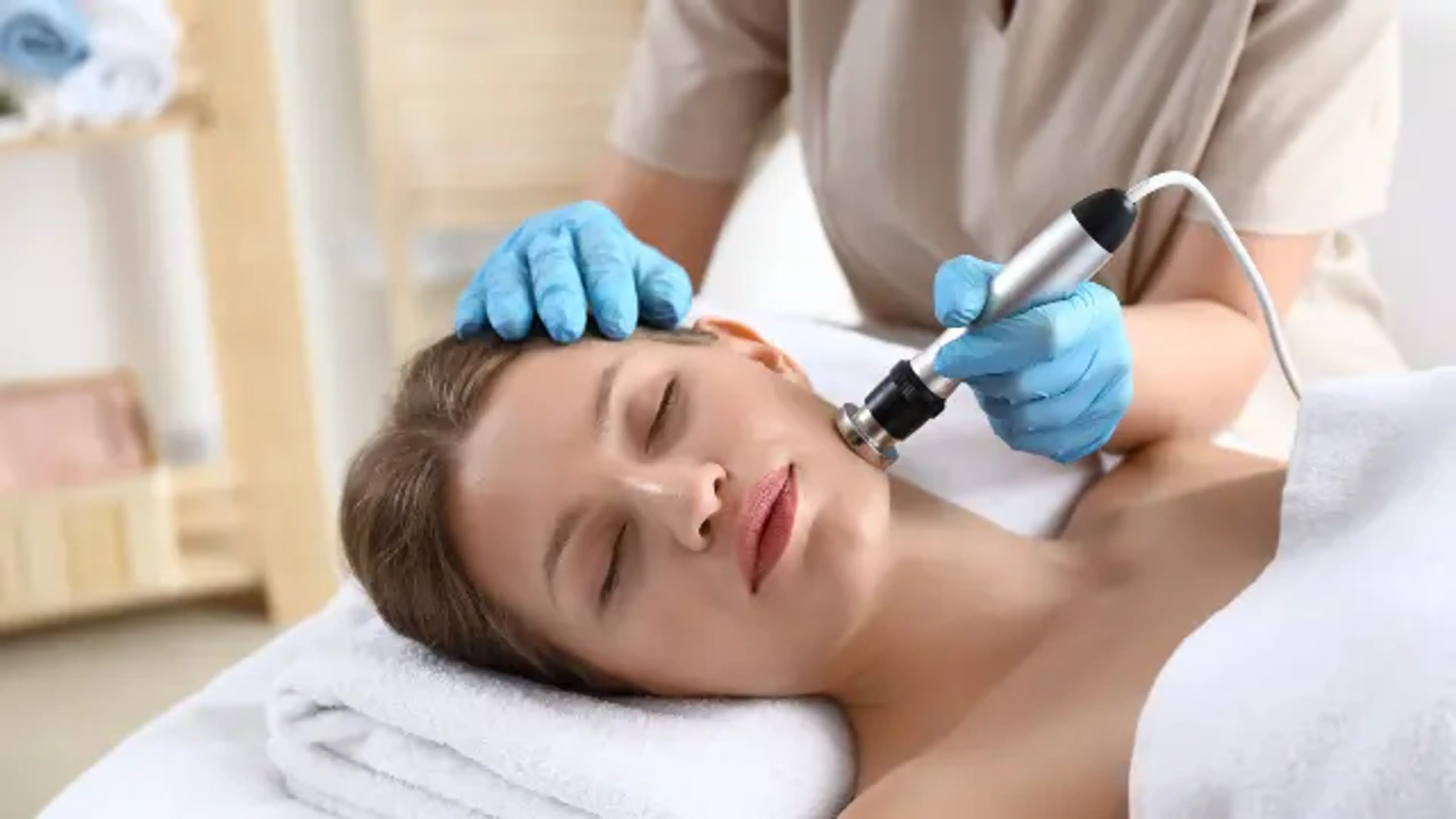
At 10:30 AM, your treatment begins. Local anesthesia is applied to your face and neck areas. PDO threads are inserted first, according to your personalized thread map (typically 30 minutes). Then SERF RF is applied to your full face and neck, tailored to the parameters designed for your specific skin type (20 to 30 minutes). Finally, Thermage FLX is applied to specific areas (typically mid-face and jawline areas, 20 to 30 minutes). Total treatment time is approximately 90 minutes to 2 hours.
By 1:00 to 1:30 PM, your treatment is complete. You rest in Lupiel's recovery room for 30 minutes. Ice is provided. Any questions are answered. You're given detailed post-treatment instructions. You leave the clinic and return to your hotel. Afternoon: you rest, ice your face regularly (ice provided by Lupiel), and have a light dinner. Evening: you rest and sleep early. Your face will feel warm and look swollen, but you can manage this.
Days 3 to 5 (Recovery in Seoul): Day 3 has mild swelling remaining. You can do light sightseeing if you want—walking around Gangnam, visiting museums, shopping (low-exertion activities). You keep ice on your face for 30-minute intervals as needed. Day 4 to 5: swelling decreases further. Makeup is possible if you want to venture out. You can do normal activities—restaurants, shopping, walking, cultural sites. Lupiel staff can recommend sites if you're interested.
Day 6 (Departure): You wake up, have breakfast, and head to the airport. Swelling is minimal by this point. You're comfortable for a long flight.
Optional Extended Stay: Some patients stay 7 to 10 days in Seoul for more in-depth recovery and additional sightseeing. Lupiel can provide recommendations for things to do during early recovery.
Once you return home, your follow-up care is structured and ongoing.
Week 1: You receive a 48-hour post-treatment check-in via WhatsApp with the clinic. Any concerns are addressed immediately. Most patients report mild residual swelling and some thread bumps still visible—all normal.
Week 2: You have a video call with your treating physician (15 minutes). The doctor assesses your healing, you take photos that are compared with your baseline, and any questions about recovery are answered. Skincare recommendations are refined based on your healing progress.
Week 6: You have a second video call with Dr. Cho. Assessment of early results happens—SERF RF and Thermage are beginning to show effects. Any concerns about thread integration or settling are addressed.
Month 3: You have a comprehensive video assessment. Photos are taken and compared with baseline. Your satisfaction is assessed. Maintenance protocol options are discussed based on your results.
Month 6: If you haven't already had a follow-up, this is your peak-results check-in to document final outcomes and discuss whether any maintenance treatments are desired.
Contact Lupiel through any of these channels:
In your initial message, include: your chief aesthetic concerns, your age and location (US state), any relevant medical history (allergies, prior surgeries, medications), any prior aesthetic procedures you've had, and your approximate timeline for treatment.
Your 30-minute video consultation with Dr. Byung-Chil Cho or Dr. Young-Joon Cho is scheduled at your convenience. No consultation fee. Submit photos beforehand. The doctor will review your photos, discuss your concerns, explain a personalized protocol recommendation, and answer all your questions. You'll receive a detailed English-language proposal within 2 business days.
Once you approve the proposal, Lupiel's scheduling team helps coordinate your flight and hotel. They send you a pre-treatment checklist, provide skincare prep recommendations, and answer all logistical questions. Treatment dates are booked 2 to 4 weeks in advance, giving you time to plan work coverage, inform family, and prepare mentally and physically.
Phone: +8225168890
Location: 7th Floor, Sangkyung Building, 669 Seolleung-ro, Gangnam-gu, Seoul, South Korea
Hours: The clinic operates on Monday and Tuesday between 10:00 AM to 1:00 PM and 2:00 PM to 7:00 PM, on Thursday and Friday between 10:00 AM to 1:00 PM and 2:00 PM to 8:30 PM, and on Saturday from 10:00 AM to 5:00 PM. The clinic remains closed on Wednesdays and Sundays.
A: You can start with one treatment, and many patients do. However, combination protocols deliver superior results for comprehensive rejuvenation. If your goal is looking significantly refreshed and transformed, a combination approach addresses skin quality, volume, and structure simultaneously—a complete solution. Many patients choose combination protocols specifically because the upfront investment delivers complete results rather than requiring multiple separate treatments spread across years.
A: Costs vary based on your specific protocol and treatment areas. SERF RF alone typically ranges from $1,200 to $1,500. Thermage FLX alone typically ranges from $2,000 to $2,500. PDO threads typically range from $400 to $800 depending on the number of threads and areas treated. A full combination lifting korea protocol combining all three typically ranges from $3,500 to $5,200. You'll receive an itemized quote based on your personalized protocol before you book.
A: Yes. Combination protocols receive a 10 to 15 percent package discount compared to treatments booked separately. This reflects the value of the integrated approach and encourages patients to receive comprehensive treatment rather than piecemeal procedures.
A: Yes. Previous non-surgical treatments like Botox and filler don't contraindicate a combination lifting korea protocol. During your consultation, discuss your complete treatment history. Dr. Cho will assess compatibility and ensure your combination protocol optimizes your results given your previous treatments.
A: Results typically sustain for 12 to 18 months before maintenance is considered. PDO threads last 6 to 9 months in terms of the physical thread structure, but the collagen they stimulate sustains the lift longer. SERF RF and Thermage results continue improving through 6 months and typically maintain at that level for 12 to 15 months. Many patients schedule maintenance SERF RF around month 12 to 14 (without necessarily repeating Thermage or threads) to extend their results.
A: Yes, but with strategic sequencing. Blepharoplasty would typically be performed on day 1 or day 2. Non-surgical treatments (SERF RF, Thermage, PDO threads) would be scheduled for days 3 or later to allow initial surgical healing. This staggered approach lets your surgeon monitor initial healing before adding non-surgical treatments. This would be discussed and planned carefully during your consultation.
A: SERF RF, Thermage FLX, and PDO threads are safe for all skin types. During your consultation, Dr. Cho assesses your specific skin type and creates a personalized, safe protocol with adjusted parameters if needed. Darker skin types may require adjusted radiofrequency settings, for example. The point is that the treatments are customizable to your skin.
A: Dr. Cho's entire treatment philosophy is built around invisible results. The goal is that people say, "You look great," not "You've had work done." Combination protocols at Lupiel enhance your natural features and improve your appearance while maintaining your identity. You won't look pulled, overfilled, or artificially transformed. You'll look like yourself, refreshed and rejuvenated.
A: No, non-surgical procedures are not recommended during pregnancy or nursing. Your hormones are shifting, your skin is changing, and your body is focused on pregnancy or lactation. You can have a consultation to plan a future protocol postpartum or once nursing is complete. Most physicians recommend waiting at least 3 months after nursing ends before aesthetic procedures.
A: Lupiel has a comprehensive post-treatment protocol for international patients. Telemedicine follow-up with your treating physician happens at scheduled intervals (2 weeks, 6 weeks, 3 months). If a complication arises between visits, you contact Lupiel immediately via WhatsApp. Your case is handled by your treating physician. Most complications are minor (unexpected swelling, mild asymmetry) and resolve with conservative care. If in-person assessment is needed, Dr. Cho can recommend a qualified US-based provider near you for local evaluation.
A: Standard radiofrequency heats your dermis uniformly, triggering collagen regeneration throughout. SERF RF is selective electrical radiofrequency that delivers energy at multiple specific dermal depths simultaneously. This means you get targeted collagen regeneration at the superficial level (for fine lines), mid-dermis level (for elasticity), and deep level (for structural support) all in one treatment. It's a more comprehensive approach that single-depth radiofrequency can't match. SERF RF is currently more available in Korea than in the US, which is one reason why combination lifting korea protocols are more advanced here.
A combination lifting protocol represents the gold standard in comprehensive facial rejuvenation—addressing skin quality, volume loss, and structural support simultaneously through a carefully orchestrated sequence of treatments. At Lupiel Clinic, these protocols are never templated. They're designed specifically for your anatomy, aging pattern, and aesthetic goals through a 90-minute consultation with Dr. Byung-Chil Cho. The investment typically ranges from $3,500 to $5,200 for your full Seoul trip, and it delivers results that single treatments simply cannot achieve. These improvements sustain for 12 to 18 months.
As a board-certified plastic surgeon with 30 plus years of experience and 400 plus annual procedures, Dr. Cho has refined the combination lifting korea approach to deliver natural-looking, lasting results. Your treatment will be physician-directed, medically precise, and supported by a structured post-operative protocol that extends through your return home.